
Seeding
Professional seeding and landscape restoration to stabilize soil and promote healthy regrowth.
Overview
Every excavation project leaves exposed soil — and exposed soil is vulnerable soil. Earthwise Excavating provides professional seeding services that close the loop on every project, stabilizing disturbed earth, preventing erosion, and restoring the natural green cover that protects your land.
As a conservation-focused company, we consider seeding an essential part of responsible land development — not an afterthought. Whether we’re restoring a graded building pad, stabilizing a new pond embankment, or revegetating a cleared field, we use the right seed, the right method, and the right timing for lasting results.
What’s Included
- Seed Selection — We choose appropriate grass and cover crop mixes based on your site conditions, intended use, and Ohio’s climate.
- Seedbed Preparation — Proper surface preparation including final grading, light tillage, and soil amendment as needed.
- Broadcast & Drill Seeding — Traditional seeding methods for flat areas, fields, and prepared seedbeds.
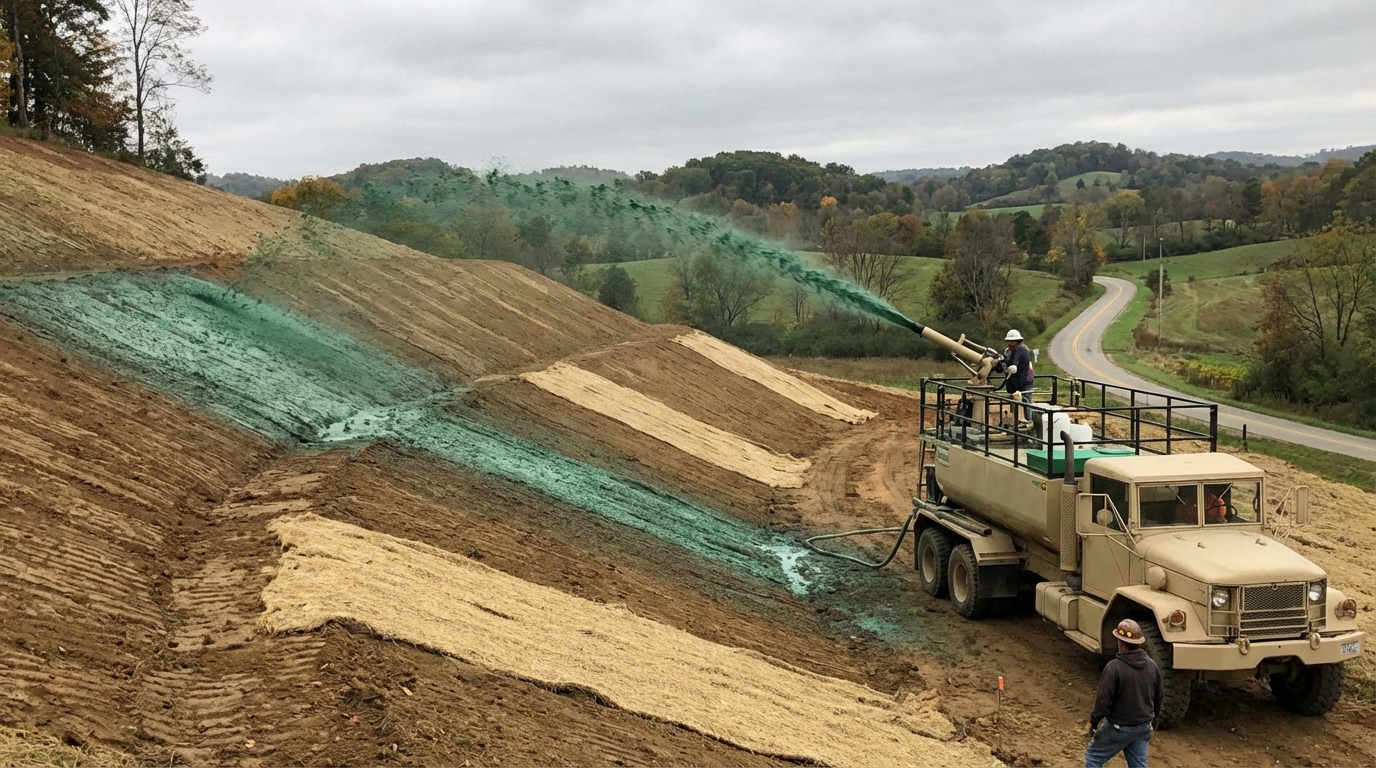
- Hydroseeding — High-performance slurry application for slopes, large areas, and erosion-sensitive sites.
- Erosion Protection — Straw mulch, erosion blankets, and tackifier applied to protect seed and soil until vegetation establishes.
Our Process
- Site Evaluation — We assess soil conditions, slopes, sun exposure, and intended use to determine the best seeding approach.
- Seed & Method Selection — We recommend the right seed mix and application method for your project and timeline.
- Professional Application — Our crew prepares the seedbed and applies seed with proper rates and coverage for uniform establishment.
- Erosion Protection — We install mulch, blankets, or other stabilization measures to protect the seed during germination and establishment.
FAQ
Common Questions About Seeding
When is the best time to seed in Ohio? +
The ideal seeding windows in Southwest Ohio are mid-March through May for spring seeding and mid-August through October for fall seeding. Fall is generally preferred because cooler temperatures and reliable rainfall promote better germination, and there's less weed competition. However, we can seed year-round using dormant seeding and erosion control measures when project timelines require it.
What types of grass seed do you use? +
We select seed mixes based on the specific use and site conditions. For erosion control and general cover, we typically use a blend of fescue, ryegrass, and clover. For pasture restoration, we choose forage-quality mixes. For construction sites, we use Ohio EPA-approved erosion control seed mixes. We'll recommend the right mix for your project.
How long does it take for seed to establish? +
Germination typically begins within 7-14 days under good conditions. Initial grass coverage is usually visible within 3-4 weeks. Full establishment with a dense, erosion-resistant root system takes one full growing season. We include erosion blankets or straw mulch on slopes to protect the seed during the establishment period.
Do you offer hydroseeding? +
Yes. Hydroseeding applies a slurry of seed, mulch, fertilizer, and tackifier through a high-pressure hose, which is ideal for slopes, large areas, and sites where erosion control is critical. It provides better seed-to-soil contact and moisture retention than broadcast seeding, leading to faster and more uniform germination.
Ready to Break Ground?
Contact us today for a free consultation about seeding.